
#KC1-1 What Causes Aging? Part 1/4
Primary hallmarks of Aging #1 - Genomic instability

Aging affects everyone. It is a complex process that happens in multitude - from changes in our hair and skin, down to molecular level, with series of interconnected processes. Till this day, we still don't have an answer as the singular cause of aging. Fortunately, after decades of research, scientists have established a framework - Hallmarks of Aging, to help us understand aging better.
In this series of posts, we will be taking a more relaxed approach as we explore the Hallmarks of Aging, one at a time.
Genomic instability
Our genome includes all of our genetic information. It is like the instruction manual for our body, telling our cells what to do and how to behave. A manual can get damaged when you spill a cup of coffee over it, accidentally tear the page apart or simply let it wear down over the years in a sunny corner of your home. Our genome can also be damaged by both environmental factors like exposure to DNA-damaging chemicals and radiation, and internal challenges inside cells, such as free radicals formation and chromosomes replication during a normal cell division. Yes, you read it correctly. Every time a cell divides, it breaks its chromosomes in order to replicate. On average, our chromosomes face trillions of breaks per day, just from cell division alone.
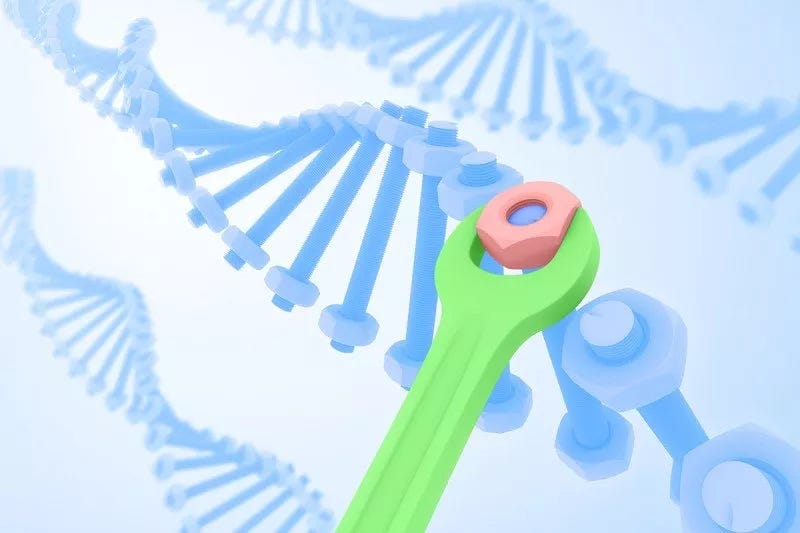
Luckily our body has a natural defense and repair mechanism in place for this type of damage, and thanks to DNA's stable double strands structure, it is relatively easy to conduct the repair effectively. However, our repair team can get overwhelmed if they are overloaded with tasks that can't be completed in a timely manner. The waiting list can be long, but these cells will not be allowed to divide any further until they get their DNA fixed. This makes sure the damaged DNA does not get passed down to the new cells. It is a smart protective mechanism, but not perfect. Not all the cells with damaged DNA will be waiting patiently in the queue to get their DNA treatment. Damage on some cells can potentially cause certain gene mutations that enable them to skip the security checkpoint. If these mutated cells are not caught in time, they can replicate and divide uncontrollably with their mutated genes, just like what we see with cancerous cells.
When we zoom out and take a look at the full picture: as all the aging hallmarks slowly build up over time, they interact and influence each other, gradually making our DNA repair team more prone to becoming overwhelmed. As a result, our bodies become more susceptible to diseases and cancers as we age.
What we can do
Now that we have an understanding of genome instability and its consequences, let's explore ways to work with our body to alleviate the workload on our DNA repair system and reduce the accumulated damage on our genome.
Quit smoking. You've probably heard enough negative things about smoking from the media and your doctors, but I want to share one more piece of information related to our topic here: smoking damages your DNA. It is not just about tobacco, the process of smoking produces several other harmful chemicals as well. The accumulated damage can lead to genomic instability and make people age faster and more prone to have cancer. This is true for both smokers and all the secondhand-smoking victims. For you and your loved ones, quit smoking and try your best to avoid second-hand smoking.
Be mindful about radiation. We're not talking about stressing yourself out to avoid radiation to the extreme, but it's wise to be mindful of extra radiation in our daily lives. Some common sources of radiation include radon in homes, UV light and X-rays. If you live on the first floor or have a basement, it's a good idea to have your home tested for radon. To protect yourself from UV light, put on sunscreen, wear a hat and sunglasses. Be mindful and have X-rays and CT imaging tests only when medically necessary. If you'd like to learn more about their relative radiation doses, you can find additional information here.
Monitor any chronic infections. Chronic infections can put constant stress on cells, leading to the formation of more free radicals and DNA damage. Some common chronic infections include liver infections such as Hepatitis B and Hepatitis C, and stomach infection caused by the bacteria Helicobacter pylori. Have a discussion with your primary doctor about any potential screening tests, if necessary.
The Takeaway
Our genomes are exposed to daily challenges that can cause DNA damages, but our innate repair system is in place to help. However, if our behaviors introduce too much DNA damage, the repair system can become overwhelmed. This can result in impaired organ function, accelerated aging, and even the formation of cancer cells.
To protect our DNA from excessive damage, it's important to avoid smoking in any form, protect ourselves from extra radiation, and make sure any chronic infections inside our body are properly addressed.
We will be exploring another Primary Hallmarks of Aging and how to prevent it in the next post. Join my journey here at Living without Aging, so you won't miss any future updates.
Look forward to talking to you soon 😊